
Cycles, not swings
Australia has among the highest rate of share ownership in the world, and for good reasons. We have some solid companies with long histories, connected to our banking and mining industries in particular. We also have a very broad-based superannuation system encouraging share ownership. A number of high-profile IPOs and demutualisations also introduced shares to many people who otherwise never would have become investors; think Commonwealth Bank, Telstra, NRMA, AMP and Medibank. Broad share ownership is a great thing – not just in terms of ensuring a broad marketplace for trading and raising capital, but also as a mechanism for the future growth of individual wealth.
Many investors, however, especially retirees, lament the swings associated with share market. The sharp ups and downs that can whipsaw portfolio values and emotions. The alternative isn’t to abandon growth, but to lean into assets where returns tend to follow cycles: slower moving, fundamentals driven patterns that can translate into steadier income. Commercial property—and within it, industrial—sits squarely in that camp.
Why retirees like them—and what drives the swings?
Australian shares have a lot going for them in retirement portfolios. Dividends are frequent, franking credits can boost after tax income (even producing cash refunds for SMSFs in pension phase), and liquidity makes rebalancing easy. That’s why many retirees hold a core allocation to Aussie equities.
But the very features that make shares attractive—daily pricing and rapid information flow—also create volatility. Today’s market backdrop adds a few amplifiers:
None of that is a case against shares—many retirees rightly value dividend growth and franking. It’s simply a reminder that listed markets, by design, price every headline in real time. That’s the swing.
Property and economic cycles: slower, steadier drivers
Commercial property typically moves through multi-year cycles linked to supply, demand, rental growth, cap-rate trends and credit conditions. Those drivers change more slowly than daily equity news, and leases can embed annual indexation or fixed uplifts. This dynamic is helpful for constructing a portfolio for predictable, growing income, and in turn helpful for planning retirement income. In Australia’s industrial sector, vacancy, pre-commitment rates, and replacement-cost inflation are the key dials to watch.
Why industrial?
Put simply: persistent demand, constrained supply in key precincts, and leases that often hard-wire rental growth. Post- pandemic tailwinds like e-commerce, onshoring and automation have structurally lifted industrial space demand, while higher construction costs and land scarcity have limited new competitive supply. The result has been low national vacancy and rental growth outpacing inflation in many markets – conditions that support income resilience over the cycle.
For retirees comparing asset classes, that distinction matters. Equities monetise growth through the intersection of corporate performance, economic growth and speculation across the two – rendering volatile prices and variable dividends part of the deal.
Industrial property tends to monetise growth through contracted cash flows that re set annually, with capital values following the income over time. That’s the cycle.
Zooming in: Industrial property for retirement portfolios
If industrial property is new to you, think of it as an ecosystem of warehouses, logistics facilities, manufacturing sheds, cold storage and, increasingly, data centre adjacent sites. What can it offer retirees?
Today’s themes: why volatility may persist in shares – and why industrial’s tailwinds look durable
Sharemarket volatility drivers (2025–26):
Industrial property tailwinds:
A worked example: An industrial trust through the cycle
The Trilogy Industrial Property Trust (Trust) is one vehicle that illustrates these dynamics: diversified national portfolio, long dated leases to recognisable tenants, and a track record of monthly income distributions alongside selective acquisitions and divestments to protect WALE and rental quality.
Trilogy Funds aims to deliver regular income first, then look for sensible ways to grow the value of the properties over time. In practice, that means prioritising strong tenants and leases so rent keeps coming in and then improving assets where it makes economic sense – often in step with a tenant’s needs (for example, extra space or upgrades).
Across the portfolio, the team focuses on tenant strength, lease length (WALE), and locations where tenants have fewer like‑for‑like alternatives – all factors that can help keep properties occupied and rents paid through the cycle.
For retirees who want income first but still care about growth, that’s the attraction: distributions underpinned by leases with built in increases, and multiple levers (leasing, expansions, targeted trading) to nudge total returns over the cycle – without living through daily price whiplash.
Balanced, not binary
This isn’t an argument to abandon shares. Franked dividends remain a powerful component of retirement income, and equities can compound wealth over decades. It is an argument to recognise that equity markets are prone to swings, while well selected industrial property tends to move in cycles – and to weight your portfolio accordingly if smoother income is the priority.
If you’d like to explore how a diversified industrial property portfolio could complement your current holdings, speak with one of our consultants.
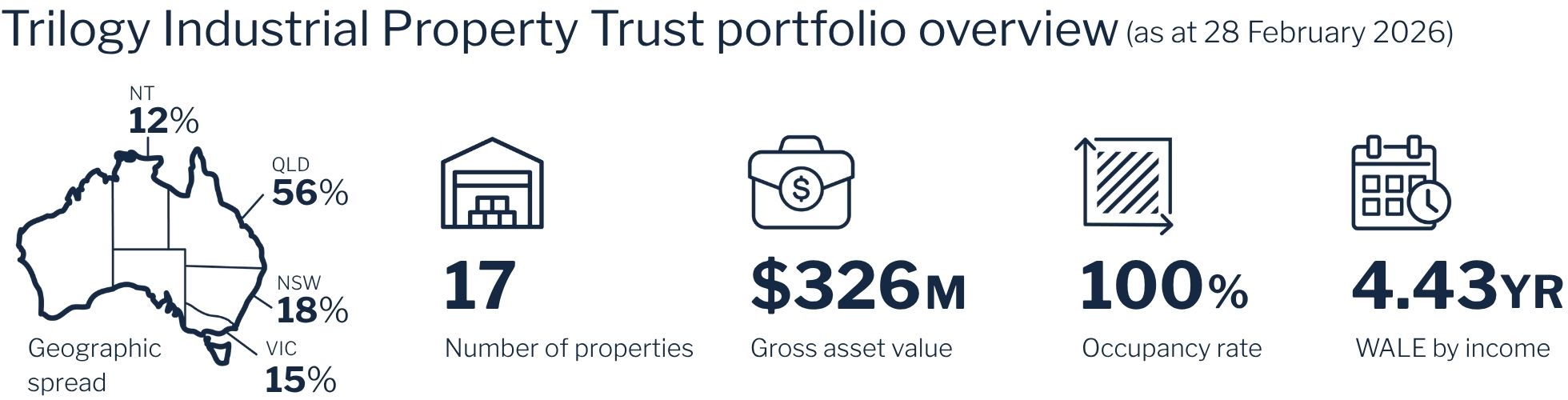
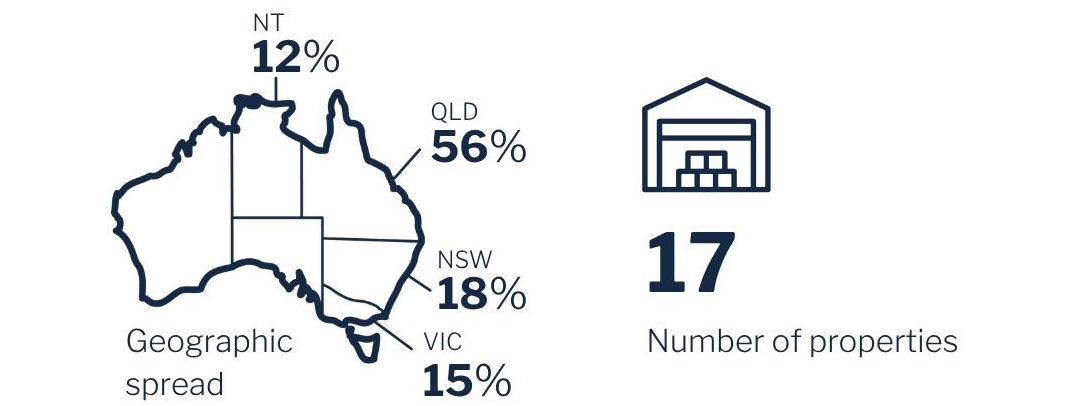
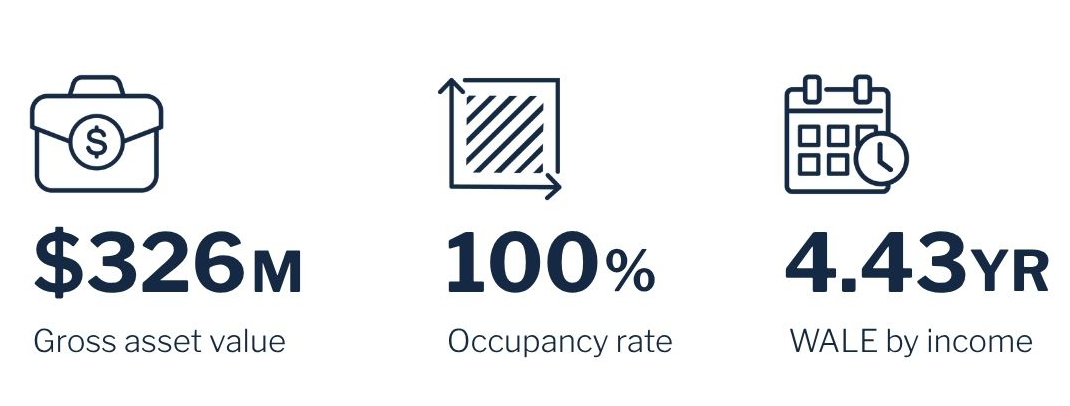
Trilogy Industrial Property Trust portfolio overview (as at 28 February 2026)
Issued by Trilogy Funds Management Limited ABN 59 080 383 679 AFSL 261425. Click for PDS and TMD for Trilogy Industrial Property Trust ARSN 623 096 944 includes further information and risks such as loss of part or all of your capital or no or lower than expected returns. Past performance is not a reliable indicator of future performance.


