
The drivers shaping the industrial property sector
The time for industrial is now. Industrial property entered 2026 as one of Australia’s most structurally supported and strategically important real asset classes. Following a cyclical downturn beginning in mid-2022, driven largely by rising interest rates, the sector has now moved into a stabilisation and early-recovery phase. This is supported by improving capital market conditions, long-term demand drivers and the rapid expansion of data, defence, automation and AI-enabled logistics networks.
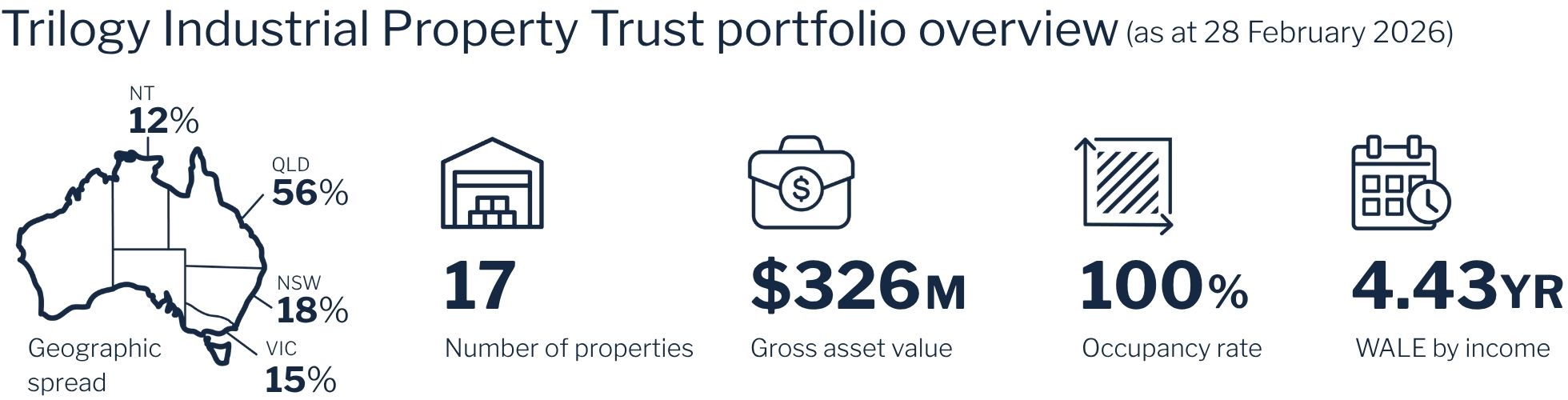
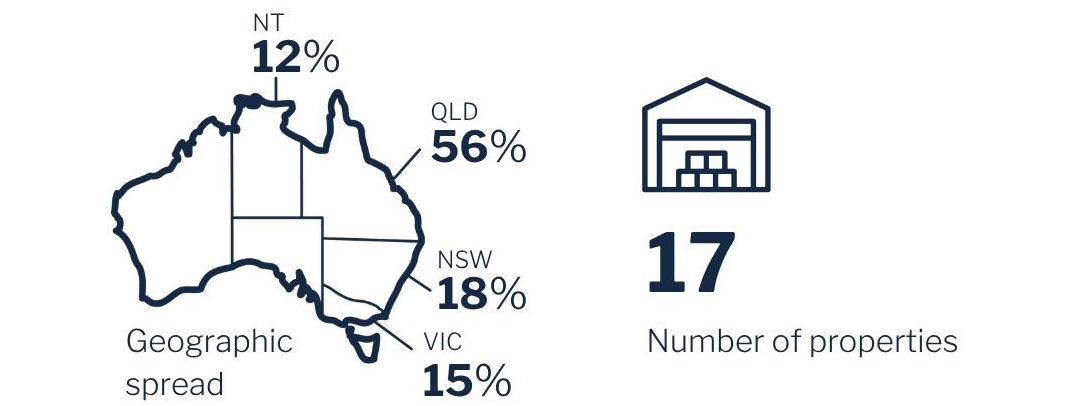
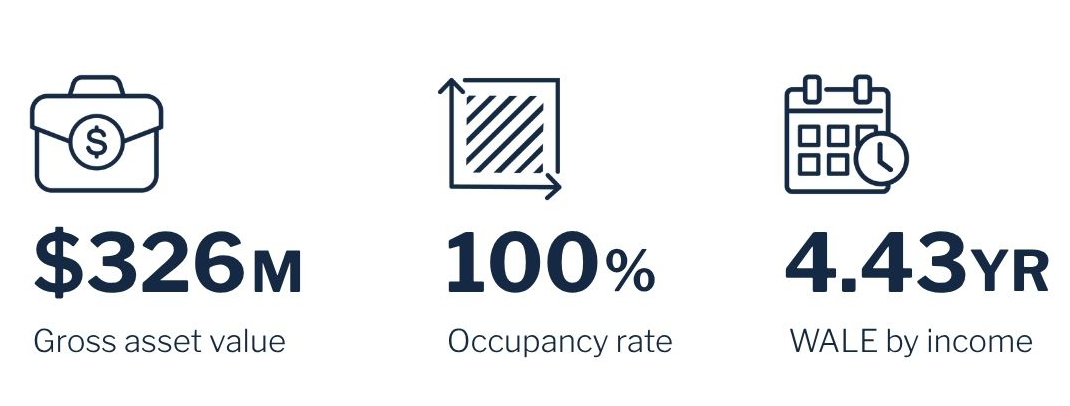
The Trilogy Industrial Property Trust (Trust) seeks to capitalise on these drivers over the long-term.
The structural drivers strengthening demand for industrial property
There are several drivers shaping the long-term demand of the industrial property sector.
Data, defence, AI and automation are reshaping industrial real estate
The strongest tailwinds currently shaping industrial demand are structural, not cyclical. In a recent interview with Livewire Markets, Head of Direct Property, Laurence Parisi, highlighted:
Most investors access these themes through shares, but industrial real estate is the physical infrastructure that enables them. The acceleration of automation and AI-driven logistics is increasing demand for:
This is an acceleration of the trend whereby facilities are evolving from passive storage to dynamic operational infrastructure.
E-commerce, inventory shifts and the ‘just-in-case’ economy
According to the Australian Bureau of Statistics, less than 13% of retail sales were made online in June 2025. While it is an all-time high for Australia, this rate still lags many developed markets, with 20% of USA retail sales executed online and 27% of UK retail sales made online. This suggests there is a significant runway for growth locally. As online retail expands, so does the demand for modern logistics facilities. These assets must accommodate:
Where the pursuit of efficiency once drove the ‘just-in-time’ philosophy, supply chain disruptions such as COVID-19, geopolitical volatility, international conflict and rapid cost inflation have led to broader adoption of a ‘just-in-case’ approach. Retailers and logistics operators now carry more stock, increasing their special needs and elevating the role of distribution centres as mission-critical nodes.
Surging population will drive further industrial property demand
Cushman & Wakefield estimates that for every new person added to the population either through birth / death rates or net migration, an additional 4 sqm of warehouse space is required.
The Centre of Population Projections forecasts that Australia’s population will grow by approximately 400,000 each year between now and mid-2035, resulting in a total population growth of 4 million people.
Based on these figures, demand for industrial floorspace is forecast to grow by approximately 1.6 million square metres annually, for a total increase of 16 million square metres by mid-2035.
The time for industrial is now
The cyclical correction has now largely ceased, meaning the industrial sector’s 2026 outlook is defined less by recovery and more by positioning for the next wave of structural demand. Data infrastructure, defence logistics, automation, artificial intelligence, e-commerce penetration and evolving inventory strategies are reshaping the sector in real time.
Industrial real estate, whether in high-growth east coast markets or strategic hubs like Darwin, is no longer a simple warehouse play. It is the backbone infrastructure for a data-intensive, automated, supply-chain-driven economy.
How the Trilogy Industrial Property Trust helps investors benefit from these long-term drivers
For investors seeking sustainable income in retirement, the Trilogy Industrial Property Trust provides exposure to an asset class that is now underpinned by multi-decade demand.
The Trust focuses on acquiring and managing properties that will benefit from the structural tailwinds discussed above.
By targeting well-located assets with modern design features, such as high-clearance warehousing, strong power capacity and connectivity suited to robotics and digital logistics, the Trust aims to capture tenant demand that is both deep and structurally supported.
This positions investors to benefit from consistent rental income streams backed by industries that are expanding regardless of short-term economic cycles.
Issued by Trilogy Funds Management Limited ABN 59 080 383 679 AFSL 261425. Click for PDS and TMD for Trilogy Industrial Property Trust ARSN 623 096 944 includes further information and risks such as loss of part or all of your capital or no or lower than expected returns. Past performance is not a reliable indicator of future performance.