For decades, favourable tax settings have supported residential property ownership. However, reforms outlined in the 2026 Federal Budget begin to unwind elements of this framework. The changes to capital gains tax (CGT) and negative gearing on residential properties are therefore likely to influence how Australian investors allocate capital more broadly, placing greater emphasis on the underlying merits of an investment rather than its tax advantages.
In this article, we explain why these changes may lead to increased demand for income-focused investment strategies, particularly those backed by high-quality commercial real estate assets.
Understanding the policy changes
The changes to CGT and negative gearing have been extensively covered in the media since the Federal Budget. However, to understand how these changes may influence investor behaviour, it is important to understand what’s changing (and what’s not).
At a high level, from 1 July 2027, the reforms will:
- Reduce or remove negative gearing benefits for existing residential properties; and
- Adjust CGT concessions.
However, there are two important points to note. First, these changes are grandfathered, meaning existing investments are largely protected. Second, incentives for newly constructed housing are preserved.
Changes to negative gearing
From 1 July 2027, negative gearing benefits for residential property investments will generally be limited to new builds. The rationale behind this decision is to focus tax support on new supply.
Existing arrangements will remain unchanged for all existing properties held prior to 7:30pm AEST on Tuesday 12 May 2026 (Federal Budget night). Investors who buy new builds will still be able to deduct losses from other income, including wages.
Investors who buy established housing after Budget night will generally be able to deduct losses only against residential property income and residential capital gains, with excess losses carried forward to future years. However, these losses will no longer be deductible against other income (like wages).
Changes to capital gains tax
After 1 July 2027, the 50% CGT discount will be replaced with a cost-base indexation model that adjusts an asset’s cost base for inflation. The new regime will also apply a minimum 30% tax rate to relevant capital gains.
Investors who purchase newly constructed homes will be able to choose between either a 50% CGT discount or indexation and the minimum tax when they sell the property.
Proposed minimum tax on discretionary trusts
In addition to both the CGT and negative gearing tax changes, the Federal Budget outlined a 30% minimum tax on discretionary trusts (such as family trusts) to be introduced from 1 July 2028. This proposed change is aimed at reducing the tax advantages of ‘tax splitting’ through discretionary trusts and may impact many trust structures used by both investors and small businesses.
It is important to note that this has not yet been legislated. Additionally, these changes are not expected to directly impact on Trilogy Funds, as its funds are structured as fixed or widely held trusts, which generally sit outside the scope of the reforms.
Implications for investors
Overall investor demand for residential property is unlikely to disappear, as the grandfathered tax reform does not force capital out of existing housing, while new builds retain the full incentive structure and are likely to see an increase in demand.
However, taken together, these reforms will reduce the extent to which investors can rely on taxation outcomes to enhance returns. As such, the new policy settings are likely to change how capital is deployed, with some investors potentially reassessing portfolio positioning.
As after-tax income from residential property becomes less favourable, investors may increasingly consider higher-yielding commercial property assets, particularly where income is supported by visibility over earnings and tenant covenants that include long lease structures and embedded rental growth.
The appeal of pooled, professionally managed commercial property vehicles
While the full impact of this tax reform will take time to emerge, Trilogy Funds considers that the investment landscape will likely continue to move towards products that offer simplicity, transparency and income generation.
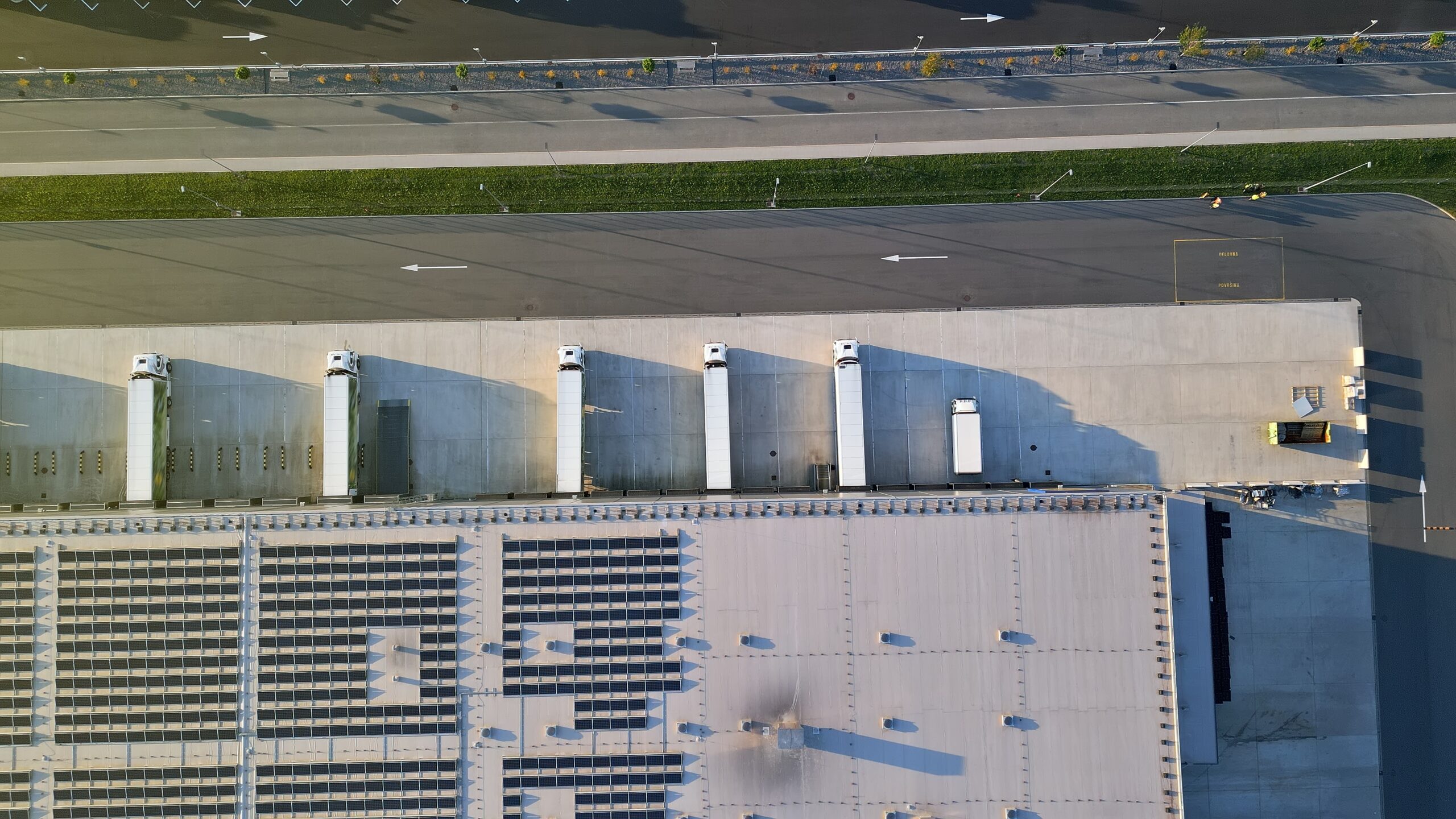
In this context, unlisted, income-focused property funds, such as the Trilogy Northern Logistics Fund and Trilogy Industrial Property Trust, reflect many of these attributes through a focus on regular income distributions, exposure to real, income-producing assets, and a structure aligned with established investment frameworks.
Unlisted property funds are investment vehicles that own and manage commercial real estate assets, such as industrial and logistics facilities, retail centres and office buildings.
Many of the characteristics of unlisted property funds are similar to owning commercial or residential property directly. The underlying assets are real properties, values don’t fluctuate daily like listed investments and it may take time to exit the investment.
Typically, these funds are structured as trusts, allowing investors to purchase units that represent a proportional share of the fund’s income and capital growth. Because capital is pooled across multiple investors, the minimum investment in a property trust can be significantly lower than purchasing a commercial property directly.
However, unlisted property funds can provide access to a diversified portfolio across multiple properties, locations and tenants (or, given the typically low minimum investment, can be diversified by holding units in multiple products), along with the expertise of professional management, which can reduce risk and enhance long-term outcomes.
As with any investment, unlisted property funds involve risks, including property market movements, tenant vacancies, valuation changes and limited liquidity.
Read Unlisted property funds in Australia: A guide to learn more
To learn more about the Trilogy Northern Logistics Fund or Trilogy Industrial Property Trust, visit trilogyfunds.com.au or contact the Trilogy Funds Investor Relations team on 1800 230 099 or [email protected].
This article is issued by Trilogy Funds Management Limited ACN 080 383 679 AFSL 261425 (Trilogy Funds) in its capacity as responsible entity for the Trilogy Industrial Property Trust ARSN 623 096 944 (Trust) and as the authorised intermediary of Trilogy Nominee Services Pty Ltd ACN 638 082 130 (Trustee) in relation to the Trilogy Northern Logistics Fund (Fund). Applications for investment in the Trust can only be made using the application form accompanying the Product Disclosure Statement dated 3 March 2025 (PDS) issued by Trilogy Funds. Applications for investment in the Fund can only be made in accordance with the Information Memorandum dated 26 August 2026 (IM) prepared and issued by the Trustee and made available by Trilogy Funds in its capacity as authorised intermediary. The PDS and Target Market Determination for the Trust are available at www.trilogyfunds.com.au. The IM for the Fund is available on request. You should read the relevant PDS or IM in full (as applicable), particularly the risks section, before deciding whether to invest. This article contains general advice only and has been prepared without taking into account your objectives, financial situation or needs. It is not personal financial advice. You should consider whether an investment is appropriate for you and seek professional advice before making any investment decision. All investments involve risk. Investment returns are not guaranteed, and you may receive lower than expected returns or lose some or all of your capital. Investments in the Trust or Fund are not bank deposits and are not guaranteed by any bank, government or other person. Past performance is not a reliable indicator of future performance.