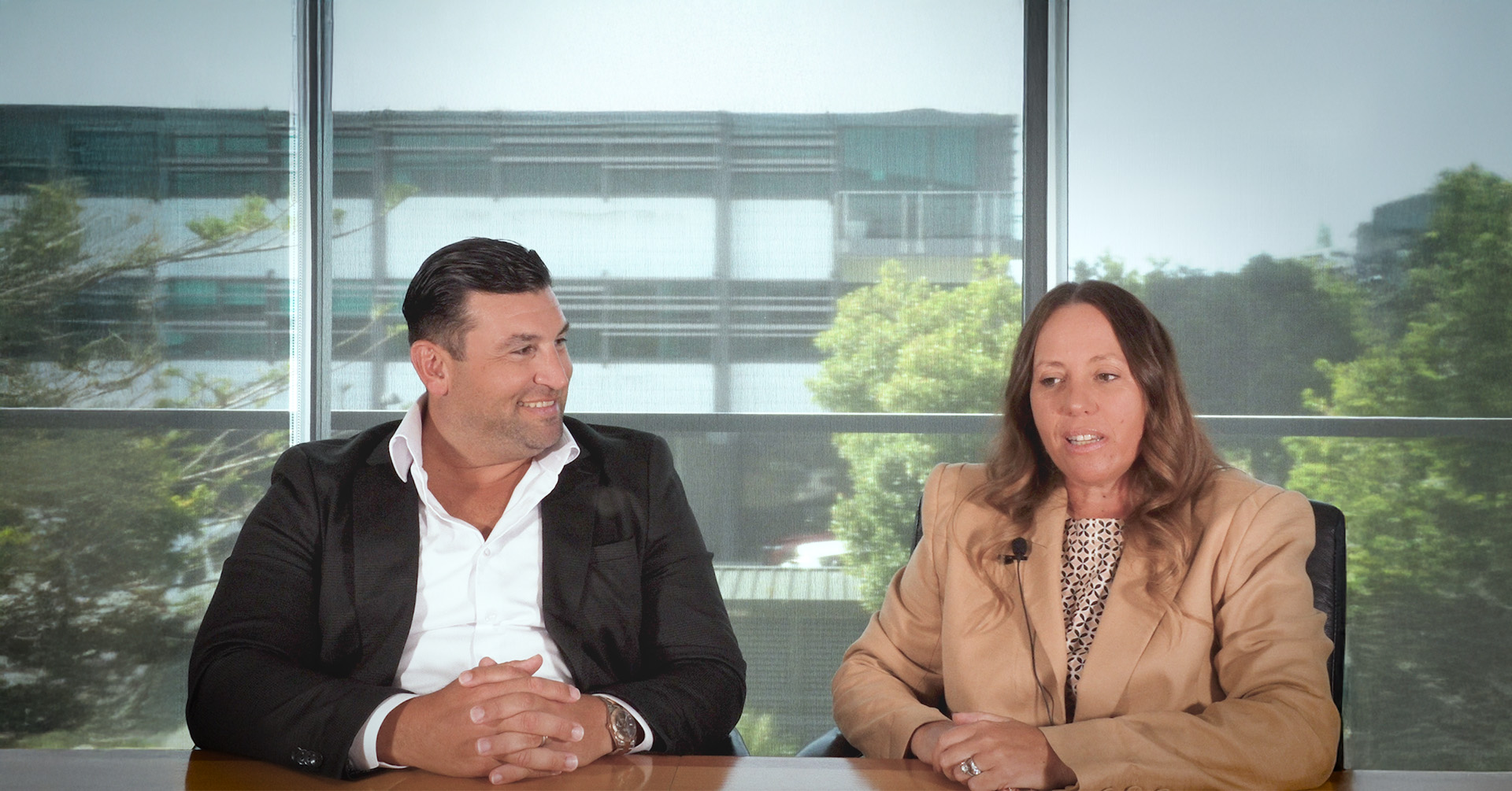
For more than 25 years, Chief Executive Officer of the Financial Advice Association Australia (FAAA), Sarah Abood, has been working and advocating across the financial services industry. For this edition of ‘In conversation’, Trilogy Funds National Manager – Dealer Groups and Platforms, Nicole Ott, sat down with Sarah to discuss the role the FAAA plays in financial advice, and how the future of the sector will likely take shape.
You led the merger of the FPA and AFA to form the FAAA. What were the biggest challenges and achievements in uniting two longstanding organisations?
The biggest challenge with the merger was ensuring that the whole would be greater than the sum of the parts. A huge amount of work was done on both sides to make sure this happened, by both staff and members. It was important that members of both the FPA and AFA felt represented and heard through the process and in the merged association.
Both groups of members were clear that their intent was to create a unified voice for financial advice and a stronger force in policy and advocacy. I feel we’ve achieved that based on strong positive feedback directly from politicians and regulators.
I’ve been involved in quite a few mergers and acquisitions over my career, and this was one of the smoothest. The boards and teams came together really well, and members were overwhelmingly supportive with around 97% voting in favour on both sides. We all saw clearly that there was a really strong case to merge, and members were pretty much saying, just get on with it!
What does the FAAA stand for today, and how do you see its role evolving over the next five years?
Our vision for the future is providing ‘Great advice to help more Australians build a better financial future’.
We help achieve that by:
- Helping our members to build successful, sustainable professional careers and businesses;
- Advocating for increased access to professional financial advice and appropriate policy settings for the profession; and
- Speaking out on issues that affect our members and their clients.
I don’t see any of this changing in the next five years, but there’s no doubt that one of our biggest challenges to achieving this is the declining number of professional financial advisers. This is a key strategic priority, and we’ll be focusing strongly on growing the profession through to 2030.
The Delivering Better Financial Outcomes (DBFO) reforms are a major focus. What are your hopes for the next tranche of legislation?
The main gains we’re hoping for in the legislation are in reducing unnecessary compliance costs. This is where we hope to see changes that will enable Statements of Advice to be much shorter and easier to produce, as well as more client-friendly. We also expect changes that will increase advisers’ confidence in providing limited scope advice and rationalise the preparation of advice through the removal of the Best Interests Duty safe harbour.
The key uncertainty lies in how a new junior adviser, or ‘New class of provider’ (NCP) will be structured. We’ve supported the idea in concept, as there’s potential for these NCPs to fill some of the advice gap for Australians who can’t currently access advice at all. There’s also the potential for them to progress over time to become fully qualified professional financial advisers – filling a gap that the institutions left when they exited advice.
Of course, many advice firms themselves also see opportunities here, the chance to broaden their advice offering and perhaps start a formal engagement with the children and grandchildren of existing clients.
But we really need to see what the scope of these NCPs will be, and how that aligns with the education they’ll be required to undertake – which will ideally fit neatly into the education requirements for professional advisers.
You’ve spoken about the ‘missing middle’, that being Australians who need advice but can’t access it. What’s the FAAA doing to bridge this gap?
Our key initiatives here are to get the input costs of advice down and increase the number of advisers. We want to make it possible to compliantly and sustainably run a business that supplies great quality advice to these consumers.
How existing advisers will respond will vary of course, depending on the type of business they want to run. Some will want to maintain a focus on high net worth clients, some might use the new class of provider to extend advice to the broader family groups of their existing clients, some might branch out into new areas they are not currently servicing. And of course, new providers might enter advice.
The other development the new legislation might encourage is in the Fintech space, where much development to date has focused on the needs of businesses. I would like to see more development of technology that can help consumers with their financial affairs and properly incorporate the financial advice role where the consumer has a trusted adviser.
How else can technology help streamline advice delivery and reduce costs?
Artificial intelligence (AI) offers huge potential to make the production of compliant advice documents faster, cheaper and easier. Many of our members are already experimenting with a range of providers and we are seeing this accelerate. There are also a number of product issuers who are embracing technology and using it to support efficiency for advice practices, which is great to see.
How do data standards factor into any discussion about AI in the future of financial advice?
Data comes first in any discussion about AI, and we still have a way to go here. There’s potential for legislation to assist in areas such as the expansion of the consumer data right to more providers including superannuation funds, managed investment schemes, platforms and insurers to ensure clients can provide access to their current data for their trusted advisers.
We also badly need access to the ATO portal, where critical financial planning data resides but is currently very challenging to access.
Once data is reliable, up-to-date and protected, the potential for AI to support financial advice skyrockets. These tools could ensure, for example, that all strategies available to a client are considered and assessed. They can learn over time the strategies that most help consumers act to achieve their goals. They can help inform consumers on issues that are directly relevant to them at a time when that information is most needed. They can monitor a client’s financial situation and issue alerts and warnings at danger points in real time, as well as opportunities that become available as a client’s situation changes.
I see human financial advisers as being integral to this future. In many cases, AI tools will provide information and alerts to a financial adviser who can help clients sort out what is most meaningful and important to them, and take action that will leave them better off.
Financial advisers will be critical both in training the AI models and ensuring that the information they provide remains correct, ethical and relevant. It will, however, be quite a long time before we can trust these tools completely.
With adviser numbers still low, how is the FAAA supporting new entrants into the profession?
Our key initiative here is the soon-to-launch ‘Advice Academy’ initiative. Advice Academy, in partnership with Striver and Kaplan, is designed to ignite interest and highlight career pathways into the financial advice profession, as well as supporting Professional Year (PY) candidates, their employers, licensees, and supervisors.
Its goals are to:
- Increase the number of students studying a qualifying degree;
- Increase the proportion of qualifying students who go on to secure a Professional Year (PY) placement; and
- Increase the proportion and skills of those who complete the PY and go on to become a fully-fledged financial adviser.
The Ethics Index shows improving public trust in financial advisers. What’s driving this shift, and how can the profession build on it?
These positive shifts reflect consumers’ greater understanding about the very high quality of advice provided by a professional financial adviser. Surveys consistently show that clients of financial advisers have very high trust in the service they receive, and strong belief that despite the high cost of financial advice, it represents good value for money. We are also seeing more and more Australians recognising that they need and can benefit from financial advice.
Of course this can be threatened by major scandals, such as the highly-publicised collapse of some managed investment schemes. Poor advice has contributed to this issue, but I am finding in my conversations with consumers and media that there’s an increasing recognition that this isn’t reflecting on their view of the whole profession. Some bad apples exist, but that is unfortunately the case in every profession.
How important is transparency and client-first thinking in shaping the future of advice?
These aspects are critical. Our profession has a duty to prioritise the interests of clients and ensuring this is honoured in every aspect advice is very important.
Transparency reinforces this – openly and honestly sharing with clients how decisions are made in the business and how we go about ensuring the client comes first. Of course, transparency is easy when all is well. Transparency when things aren’t going well, or mistakes have been made is harder – but even more important. I speak from painful experience when I say that there’s nothing like admitting a mistake to help improve and reinforce trust.
What keeps you passionate about the profession?
The vantage point of the professional association gives me access every day to the best advice and business practices across financial advice. I’m in awe of what our members achieve for their clients, despite the barriers and frustrations they often have to overcome!
I am also often inspired by the stories of our student members – understanding how they came to a career in advice and seeing their determination and persistence to achieve a career that means a lot to them is incredibly uplifting.
If you could give one piece of advice to a new adviser entering the profession today, what would it be?
Hang in there! We desperately need more great financial advisers and this profession is one of the most rewarding that you can pursue, both in terms of the positive difference you can make to clients’ lives and the financial rewards that you can achieve personally.
There’s no doubt that it can be hard at times, but it is unquestionably extremely worthwhile.
What do you get up to beyond work? Do you have any hobbies or special interests?
Sadly, all my hobbies are daggy ones. I spend a lot of time on screens and sitting in meetings during the workday, so I like to relax with hobbies like craft (knitting and sewing), cooking, gardening and reading.
The 2025 FAAA Congress will be held in Perth from 18 to 20 November 2025. Sarah will deliver the opening keynote address to expand on the insights outlined above, alongside a review of the current perspective of the profession and highlight additional challenges, disruptions and opportunities. Learn more about the FAAA Congress at https://events.faaa.au/2025-faaa-congress/.
This article is issued by Trilogy Funds Management Limited ABN 59 080 383 679 AFSL 261425 (Trilogy Funds) and does not take into account your objectives, personal circumstances or needs, nor is it an offer of securities. Investments in Trilogy Funds’ products are only available through the relevant Product Disclosure Statement (PDS). The PDS and the Target Market Determination (TMD) issued by Trilogy Funds are available at www.trilogyfunds.com.au. All investments, including those with Trilogy Funds, involve risk which can lead to no or lower than expected returns, or a loss of part or all of your capital. See PDS and TMD for details. Investments with Trilogy Funds are not bank deposits and are not government guaranteed. Past performance is no indicator of future performance.